

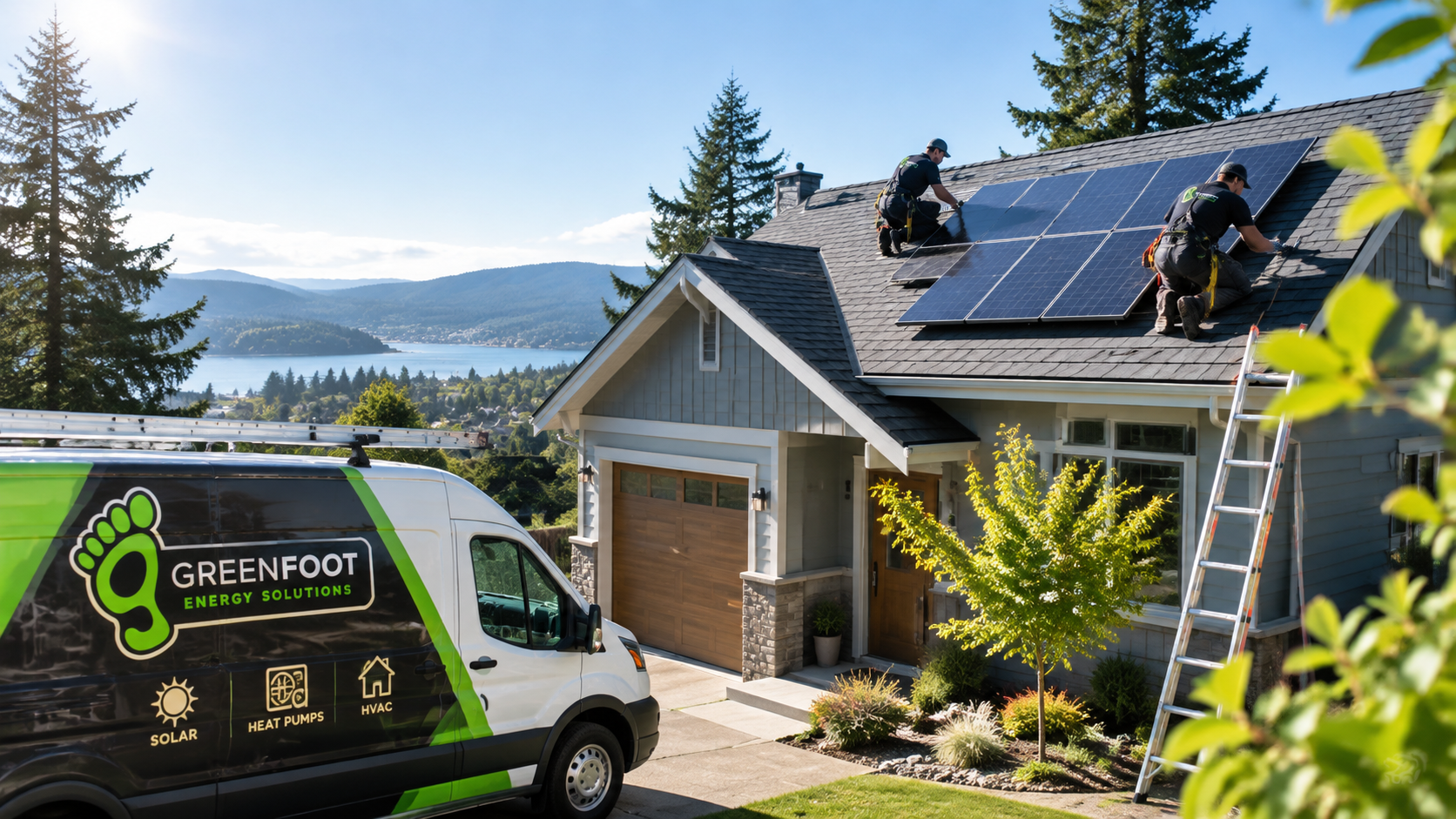
Solar energy can help homeowners take a more active approach to managing household electricity use. For those considering solar panels in Langford, effective planning starts with three important factors: household electricity use, the property’s solar potential, and expected future energy needs. Roof orientation, shading, roof condition, equipment selection, and seasonal conditions can also influence system performance. Reviewing these factors before installation can help homeowners plan a solar system that better reflects the property and its long-term electricity requirements.
Table of Contents
- Start by Understanding Household Electricity Use
- Assess the Property’s Solar Potential
- Choose Solar Panels in Langford Size Based on the Property
- Plan Solar Panel Placement Carefully
- Understand the Equipment Beyond Solar Panels
- Coordinate Solar With Other Home Energy Improvements
- Improve Household Energy Efficiency
- Ask for Realistic Solar Production Estimates
- Consider Future Household Energy Needs
- Conclusion
- Frequently Asked Questions
- Are solar panels suitable for homes in Langford?
- Do solar panels generate electricity on cloudy days?
- How many solar panels does a Langford home need?
- What factors can affect solar panel output?
- Why should HVAC requirements be considered when planning solar?
- Should the roof be inspected before solar installation?
- What should homeowners ask about solar production estimates?
- Is monitoring important after a solar system is installed?
- Frequently Asked Questions
Start by Understanding Household Electricity Use
Before selecting solar equipment, it is useful to understand how much electricity the household currently consumes. Reviewing utility bills across different seasons can reveal patterns in energy use and provide a practical starting point for estimating an appropriate solar system size.
Electric heating, cooling systems, electric vehicles, hot water equipment, and major appliances can all affect household electricity demand. Homeowners should also consider future needs.
For example, plans to purchase an electric vehicle, add new appliances, or switch to electric heating could increase future electricity requirements. Considering these changes early can help homeowners avoid planning a system based only on current usage.
Assess the Property’s Solar Potential
Not every property receives sunlight in the same way. Roof characteristics, nearby structures, vegetation, and other site conditions can influence potential solar production. When planning solar panels in Langford, homeowners should assess the entire property rather than assuming every available section of roof is equally suitable.
Check Roof Orientation and Available Space
Roof orientation can influence how much sunlight solar panels receive throughout the day. Available installation space also matters. Skylights, vents, chimneys, roof shape, and other features may limit where panels can be placed. A site assessment can identify practical installation areas and determine how effectively the available roof space may be used.
Review the Roof’s Current Condition
Consider the roof’s condition and expected remaining life before installing solar equipment. If significant roofing work is likely to be required in the near future, completing it first may reduce the possibility of having to remove and reinstall solar equipment later. This can make roof condition an important part of early project planning.
Identify Potential Sources of Shade
Trees, neighbouring buildings, roof features, and other structures may cast shadows across parts of the roof. Shading patterns can also change throughout the day and between seasons. A property-specific assessment can help identify areas that receive stronger sunlight and determine where shading could affect solar generation.
Choose Solar Panels in Langford Size Based on the Property
More solar panels in Langford do not automatically mean a better solar system. Appropriate sizing depends on several factors, including household electricity consumption, usable installation space, shading, roof orientation, equipment characteristics, and future energy requirements.
Homeowners can begin with their historical electricity consumption and then consider potential changes in household demand. A professional solar assessment can help determine possible configurations based on site-specific conditions. This approach focuses on the relationship between expected electricity use and realistic generation potential rather than simply maximizing panel count.
Plan Solar Panel Placement Carefully
Two properties with a similar number of panels may produce different amounts of electricity. Orientation, roof angle, shading, equipment characteristics, and system configuration can all influence performance. Careful panel placement helps make practical use of the roof areas that receive suitable sunlight.
When evaluating solar panels in Langford, homeowners can ask why specific sections of the roof have been recommended and whether alternative configurations were considered. Understanding the reasoning behind a proposed layout can make it easier to compare options and make an informed decision.
Understand the Equipment Beyond Solar Panels
Solar panels are the most visible part of a residential system, but other components also contribute to its operation. Depending on the system configuration, equipment may include inverters, mounting hardware, wiring, monitoring technology, electrical protection components, and other supporting equipment.
An inverter converts electricity generated by the solar panels into electricity that can be used by household systems. Monitoring technology may also allow homeowners to track electricity production over time. Understanding these components can help homeowners ask better questions when reviewing a proposed solar system.
Coordinate Solar With Other Home Energy Improvements
Solar planning becomes more useful when it considers the home’s broader energy requirements. For example, homeowners considering heat pump installation in Langford should account for how a new heating and cooling system could affect future electricity consumption. Planning solar capacity without considering upcoming electrification projects could result in estimates that no longer reflect household demand.
Speaking with an HVAC contractor in Langford may also help homeowners understand the electricity requirements associated with current or planned heating and cooling equipment. Greenfoot Energy Solutions provides solar and home energy services in Langford, allowing property owners to consider solar alongside heating, cooling, and other energy improvements when reviewing potential upgrades.
Improve Household Energy Efficiency
Reducing unnecessary electricity consumption can complement solar generation. Homeowners can review insulation, air sealing, lighting, appliance use, heating and cooling performance, and everyday energy habits. Improvements in these areas may influence the property’s overall electricity requirements.
Heating and cooling can represent an important part of household energy consumption. An HVAC contractor in Langford can assess relevant equipment and discuss options where heating or cooling improvements are being considered.
Similarly, heat pump installation in Langford may be part of a broader plan to increase household electrification. If solar and HVAC improvements are planned together, expected electricity demand should be considered before determining potential solar capacity.
Ask for Realistic Solar Production Estimates
Production estimates are useful for planning, but they should be based on realistic property conditions. Homeowners can ask what information has been considered when calculating projected output. This may include roof orientation, shading, equipment specifications, seasonal sunlight, and expected system losses.
Future weather cannot be controlled, so projected solar production should be treated as an estimate rather than a guaranteed result. This distinction is particularly important when homeowners are considering potential electricity savings or making other financial calculations related to a solar project.
Consider Future Household Energy Needs
A solar system may remain part of a home for many years, while household electricity requirements can change considerably during that time. A future electric vehicle, additional family members, new appliances, home renovations, or changes to heating and cooling equipment could affect consumption.
Someone planning heat pump installation in Langford, for example, may have different future electricity requirements from a household that expects its energy use to remain relatively stable. Thinking about likely changes does not require homeowners to predict every future energy need. Instead, it allows them to discuss reasonable possibilities when assessing solar options.
Conclusion
Planning solar panels in Langford starts with understanding the home rather than simply choosing the number of panels to install. Electricity consumption, roof orientation, shading, roof condition, seasonal sunlight, equipment configuration, and future energy requirements can all influence a solar project. Homeowners who also plan to electrify heating, cooling, transportation, or other household systems should consider those future demands when evaluating solar capacity. Taking a whole-home approach can support a more informed decision based on the property’s characteristics and expected long-term energy use.
Considering solar panels for your Langford home? Find Greenfoot Energy Solutions’ location on the map and learn more about local solar and home energy services.
Frequently Asked Questions
Are solar panels suitable for homes in Langford?
Many Langford properties may be suitable for solar, but suitability depends on factors such as roof orientation, shading, available space, roof condition, and household electricity use. A property-specific assessment can provide a clearer picture of solar potential.
Do solar panels generate electricity on cloudy days?
Yes. Solar panels can generate electricity when conditions are cloudy, although output may be lower than during periods of stronger sunlight. Annual estimates should therefore account for changing weather and seasonal conditions.
How many solar panels does a Langford home need?
There is no standard number that applies to every property. Household electricity consumption, usable roof space, panel characteristics, shading, orientation, and future energy needs can all influence appropriate system size.
What factors can affect solar panel output?
Solar generation may be influenced by sunlight availability, roof orientation, shading, weather, panel placement, equipment characteristics, temperature, and system configuration. These factors should be considered together when estimating potential production.
Why should HVAC requirements be considered when planning solar?
Heating and cooling equipment can contribute to household electricity consumption. Consulting an HVAC contractor in Langford can help homeowners better understand current or planned HVAC electricity requirements when evaluating broader home energy improvements.
Should the roof be inspected before solar installation?
The roof’s condition and expected remaining service life should be considered before solar equipment is installed. If significant roofing work is expected soon, coordinating that work with the solar project may reduce the need to remove and reinstall equipment later.
What should homeowners ask about solar production estimates?
Homeowners can ask which assumptions were used for shading, orientation, seasonal sunlight, equipment characteristics, and system losses. Production figures should be viewed as estimates rather than guaranteed future output.
Is monitoring important after a solar system is installed?
Monitoring can help homeowners understand how much electricity their system is producing and identify unexpected changes in output. Homeowners should also keep relevant equipment, warranty, and installation documentation for future reference.